
Top 7 Reasons Builders Choose GRC Over Traditional Building Materials
Stone King GRC — Redefining Strength, Style & Sustainability
In today’s fast-evolving construction industry, builders, architects, and developers are constantly looking for materials that deliver strength, durability, design freedom, and long-term value. This is where GRC (Glass Fibre Reinforced Concrete) has emerged as a superior alternative to many traditional building materials like concrete, stone, and masonry.
Whether it’s a modern façade, decorative exterior, or large-scale architectural project — GRC offers unmatched advantages. Here are the top 7 reasons why builders prefer GRC over traditional materials.
1. Lightweight Yet Extremely Strong
One of the biggest reasons builders choose GRC is its perfect balance of light weight and high strength.
- GRC panels are significantly lighter than traditional concrete or stone.
- The lighter weight reduces the load on the building structure.
- Handling, transporting, and installing GRC is quicker and more efficient.
For multi-storey buildings, renovations, and large façades, this makes a huge difference in cost and construction speed.
2. Exceptional Durability & Long Life
GRC is engineered to last. Its unique fibre-reinforced composition improves:
- Crack resistance
- Tensile and flexural strength
- Impact and weather resistance
Unlike traditional concrete, GRC does not easily chip, crack, or degrade. Builders prefer it because it performs reliably for decades with minimal maintenance.
3. Outstanding Weather & Environmental Resistance
From heavy rain and humidity to heat, dust and UV exposure — GRC stays strong in all climates.
Its resilience makes it perfect for:
- Exterior cladding
- Façade panels
- Architectural mouldings
- Coastal and high-humidity regions
Traditional materials often deteriorate faster outdoors, but GRC maintains its finish and structural quality.
4. Unlimited Design Flexibility
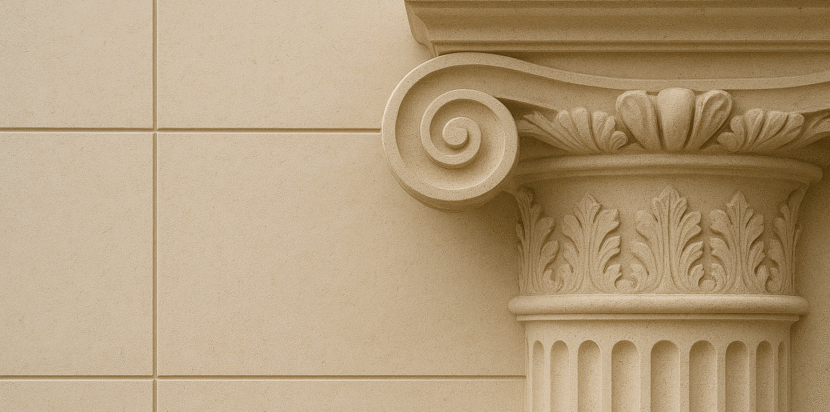
Design freedom is one of GRC’s greatest strengths. It can be moulded into almost any shape, texture, or finish.
Builders and architects choose GRC because it can replicate:
- Stone
- Timber textures
- Smooth modern surfaces
- Intricate detailing
- Curved and 3D forms
This makes GRC ideal for premium projects, decorative architecture, and signature façades where aesthetics matter.
5. Cost-Effective Over the Project Lifecycle
While traditional materials may look cheaper initially, GRC delivers significantly more value over time.
Builders save money because GRC:
- Is faster to install
- Reduces labour cost
- Lowers structural support requirements
- Requires minimal maintenance
- Lasts longer without repairs
The total cost of ownership is much lower compared to traditional stone or masonry.
6. Sustainable & Eco-Friendly Choice
As the construction world moves toward greener practices, GRC stands out as a sustainable material.
Its benefits include:
- Lower raw material usage
- Reduced structural load
- Longer life cycle (less waste)
- Minimal maintenance over decades
Builders appreciate GRC because it supports environment-friendly construction without compromising performance.
7. Faster, Cleaner & More Efficient Installation
Time is a crucial factor in construction. GRC’s lightweight and prefabricated nature make installation significantly faster.
Advantages include:
- Less heavy machinery required
- Reduced site labour
- Quick mounting on façades
- Cleaner construction sites
Builders can complete projects sooner, avoid delays, and improve overall efficiency.
Why Stone King GRC is the Builder’s First Choice
At Stone King GRC, we manufacture high-quality, precision-engineered GRC products that deliver reliability, elegance, and long-term performance. Our expertise ensures that every panel, moulding, and architectural element meets the highest industry standards.
Whether you’re working on a commercial façade, villa exterior, institutional building, or decorative architectural project, Stone King GRC provides the right balance of:
- Strength
- Aesthetics
- Durability
- Sustainability
- Cost-efficiency
GRC isn’t just a material—it’s a smarter way to build.
Comments are closed