
Why Architects Prefer GRC: Top 7 Benefits You Should Know
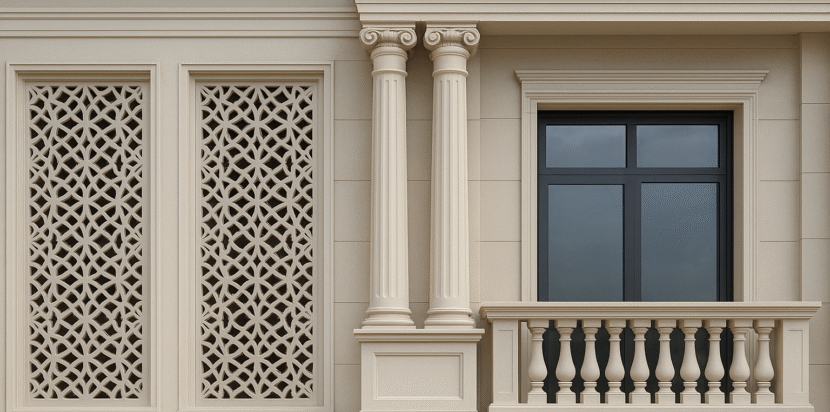
In modern architecture, design preferences are rapidly shifting toward materials that offer beauty, strength, and long-term performance. GRC (Glassfibre Reinforced Concrete) has emerged as one of the most trusted materials for façades, elevation design, and decorative architectural elements. Whether it’s GRC/FRP Jali, GRC/FRP Columns, GRC/FRP Cornice, GRC/FRP Screens, or GRC/FRP Balusters, architects today rely on GRC to achieve superior design flexibility and durability.
Here are the top 7 reasons why architects prefer GRC for premium residential and commercial projects.
1. Exceptional Design Flexibility
One of the biggest reasons architects choose GRC is its unmatched design freedom. GRC can be molded into almost any shape—simple or complex—without losing strength.
This makes it ideal for:
- Intricate GRC/FRP Jali patterns
- Classical and modern GRC/FRP Columns
- Detailed GRC/FRP Cornice designs
- Custom façade GRC/FRP Screens
With GRC, architects are not limited by rigid shapes or expensive fabrication methods.
2. Lightweight Yet Highly Durable
Despite being significantly lighter than traditional concrete, GRC is extremely strong.
Its lightweight nature:
- Reduces structural load
- Makes installation faster
- Lowers transport and handling costs
Yet, it provides long-lasting strength, making it perfect for exterior elements like screens, cornices, and columns.
3. Weather & Moisture Resistant
GRC is built to withstand harsh environmental conditions such as:
- Heavy rains
- UV exposure
- Humidity
- Temperature variations
This is why architects prefer GRC/FRP for outdoor features like balusters, jali work, and cladding panels, knowing they will remain intact for years.
4. High Aesthetic Appeal for Façade Design
GRC gives a premium and elegant appearance to any building.
It naturally enhances architectural beauty with:
- Sharp edge detailing
- Smooth finishes
- Custom textures
- Intricate carvings
From traditional Indian façades to modern minimal designs, GRC/FRP Cornice, Columns, and Screens elevate the visual appeal of both residential and commercial structures.
5. Fire-Resistant & Safe for Buildings
Safety is a top priority for architects.
GRC is naturally:
- Fire-resistant
- Non-combustible
- Low-maintenance
This makes it ideal for structural and decorative elements like cornices, jali designs, and balustrades, ensuring long-term safety without compromising style.
6. Cost-Effective for Builders & Architects
GRC offers an excellent balance of cost vs. performance.
Its advantages include:
- Lower installation costs due to lightweight structure
- Reduced maintenance expenses
- Long lifespan with minimal repairs
This makes architectural elements like GRC/FRP Jali and screens affordable without compromising quality.
7. Sustainable and Eco-Friendly Material
With the growing emphasis on green building, GRC stands out as an eco-friendly choice.
It uses:
- Less cement
- Lower energy for production
- Recyclable materials
Architects who prioritize sustainability often choose GRC/FRP for façades, jalis, balusters, and decorative columns.
Comments are closed